
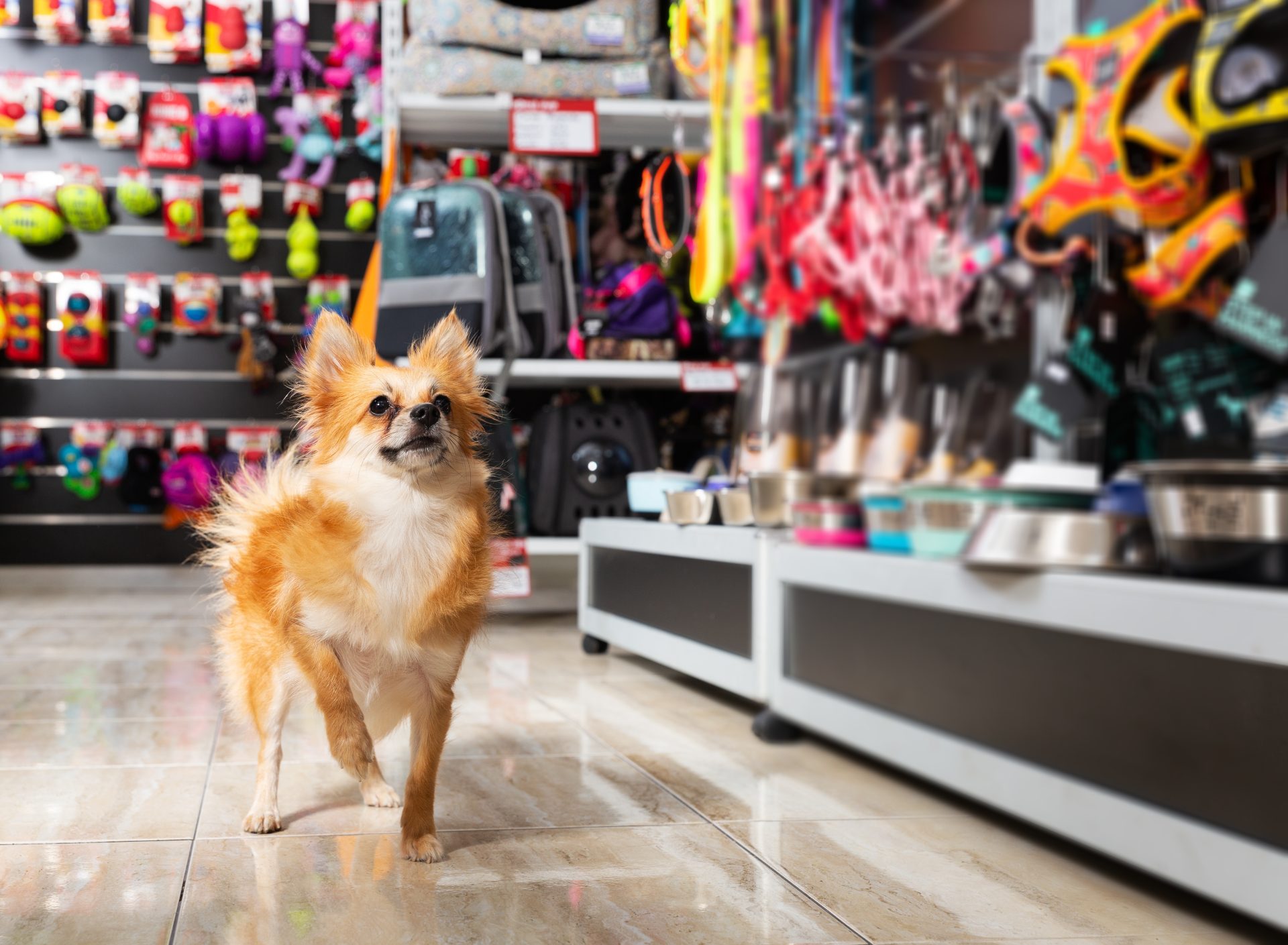
Pet ownership rose notably during the pandemic, and most owners consider their pets part of the family and care deeply about their needs. It’s no surprise that US pet industry spending runs well over $100 billion a year, according to the American Pet Products Association.
So, what does this mean for pet store owners? More importantly, how can they bring more people into their stores and make the most of this growing opportunity? In this article, we’ll share our top tips for making your pet store easy to navigate so that it engages customers and boosts conversions.
In short: To make a pet store easy to navigate, use clear wayfinding and color-coded promotional signs, organize products by animal and life stage, keep windows and shelves clean and stocked, maintain spotless animal habitats, have knowledgeable staff on hand, and audit displays regularly.
1. Use clear and attractive signage
Signage plays a crucial role when it comes to reducing friction during the buying journey and offering seamless customer experiences in-store. You may have gorgeous window displays that draw people in, but if they can’t find products easily at your pet store, you’re leaving money on the table. That’s why it’s important to have clear, well-placed, and great-looking signs that gently nudge your customers towards all that your pet store has to offer.
Besides navigational signage, make sure you have some eye-catching promotional signs. Consider color coding the most popular promotions so that customers can identify them easily.
For example, you could use blue to symbolize Buy One, Get One (BOGO) offers, green for 50% off, etc. Just remember to display the key (for what each color means) prominently so that even first-time visitors can figure out what they mean.

Image credit: Shutterstock
It’s important to note that promotional signs don’t necessarily have to be salesy. You can also use them to educate your customers about the USP or benefits of a particular product. Sometimes, it could be just the thing they needed to make their purchase decision. It’s also a good idea to have some signs encouraging customers to ask for help if they can’t find the exact product variant they are looking for.
2. Ensure that store displays are fully stocked and orderly
Your store windows are where you can make the magic happen; beautiful window displays can pique the interest of passers-by and encourage them to check out your store. Make sure they are well lit, cleaned daily, and offer a visual treat to prospective buyers. The last thing you want is a shop window covered in dust, grime, fur, or feathers. You should also keep the most popular merchandise front and center in your store windows, along with other novelty products.
Besides the windows, make sure that your store interiors are clean and organized and your displays are not sitting empty.
To make sure customers can easily find what they’re looking for, arrange your products in different categories. For example, you should create separate sections for cats, dogs, birds, reptiles, etc.
You should then subdivide these into categories like food, toys, cages and carriers, litter trays, and other products. It may be helpful to break them down into sub-categories, perhaps based on the different stages in an animal’s life cycle. For instance, puppies and adult dogs have different nutritional requirements.
Keep your shelves fully stocked and see to it that no items are out of place. And don’t forget to label your merchandise carefully so customers have all the information they need.
It’s also a good idea to keep some novelty products next to everyday items. For example, you may want to keep bowls, feeders, or cute toys next to the relevant pet food. This is a great strategy to get your customers to “impulse buy” a few additional items they may not have planned on getting.
3. Keep animal habitats/displays clean and in good condition
Nothing can be more off-putting to customers than a dirty or unhygienic shop, and pet stores require greater upkeep than most. It doesn’t take much for a pet store to get dirty; without regular cleaning, the place can be a breeding ground for germs and other harmful organisms. Not to mention, violating health and safety codes for animals can make you liable for hefty fines and penalties.
A clean and well-maintained pet store puts customers at ease and makes their shopping experience more comfortable and enjoyable. To that end, here are a few things to keep in mind:
- Make sure that the animals are properly fed and well groomed.
- Check that their cages are cleaned regularly and their habitats aren’t congested so they have enough space to move around.
- Ensure that animals are “safely” and appropriately showcased in the store without getting in the way of navigation.
- Vaccinate animals on time and display their vaccination history along with their lineage.
Finally, make sure that you’re aware of the local and state laws so you don’t end up violating any health and safety codes for animals.

4. Ensure the availability of store staff to help customers navigate
Even if you have a well-designed store with great signage all over, you still need to have store associates available to help out customers in need. Some may just be looking to pick up a specific item quickly while others may need some help picking out the right food, leash, or pet carrier.
It’s important that your store staff is knowledgeable enough to help customers choose the products that are best suited for their needs. They should be easily reachable when needed, whether it be to point people in the right direction, help them choose between similar products, or assist people with disabilities.
Not only can this elevate the customer experience, but also provide more opportunities for ringing up more sales through cross-selling or upselling.
5. Don’t forget to conduct regular audits
Finally, conduct regular audits of your pet store displays to ensure they’re up to your brand’s standards. Now, this may seem like an overwhelming process, but it doesn’t have to be.
Bindy’s smart forms and corrective workflows make it really easy to inspect and identify common issues, drill down on their root causes, and assign corrective actions (with photos to illustrate best practices) to help your staff elevate the quality of your store displays. That means you don’t need to take any time away from selling or focusing on other important areas of your business while still making sure that your animal habitats, displays, and signage are on point.
Final words
When designing or setting up your pet store, look for ways to make the lives of your customers easier. That means providing them with the right information every step of the way — be it through clear and informative signage or the assistance of knowledgeable store staff. Also, conduct regular audits and inspections to ensure that your displays are up to your brand’s standards and provide a great customer experience for shoppers.
Keep habitats, displays and signage on point
Bindy helps pet retailers run animal care checklists, display audits and corrective actions with photos, across every store. Plans start at $129/month with unlimited users and locations. Start free for 14 days, no credit card required.
About the author:

Francesca Nicasio is a retail expert, B2B content strategist and LinkedIn Top Voice. She writes about trends, tips and best practices that help retailers increase sales and serve customers better.





 EN
 AR
 NL
 FR
 DE
 EL
 HE
 HI
 IT
 JA
 KO
 PL
 PT
 ES
 SV
 TR
Leave a Reply