
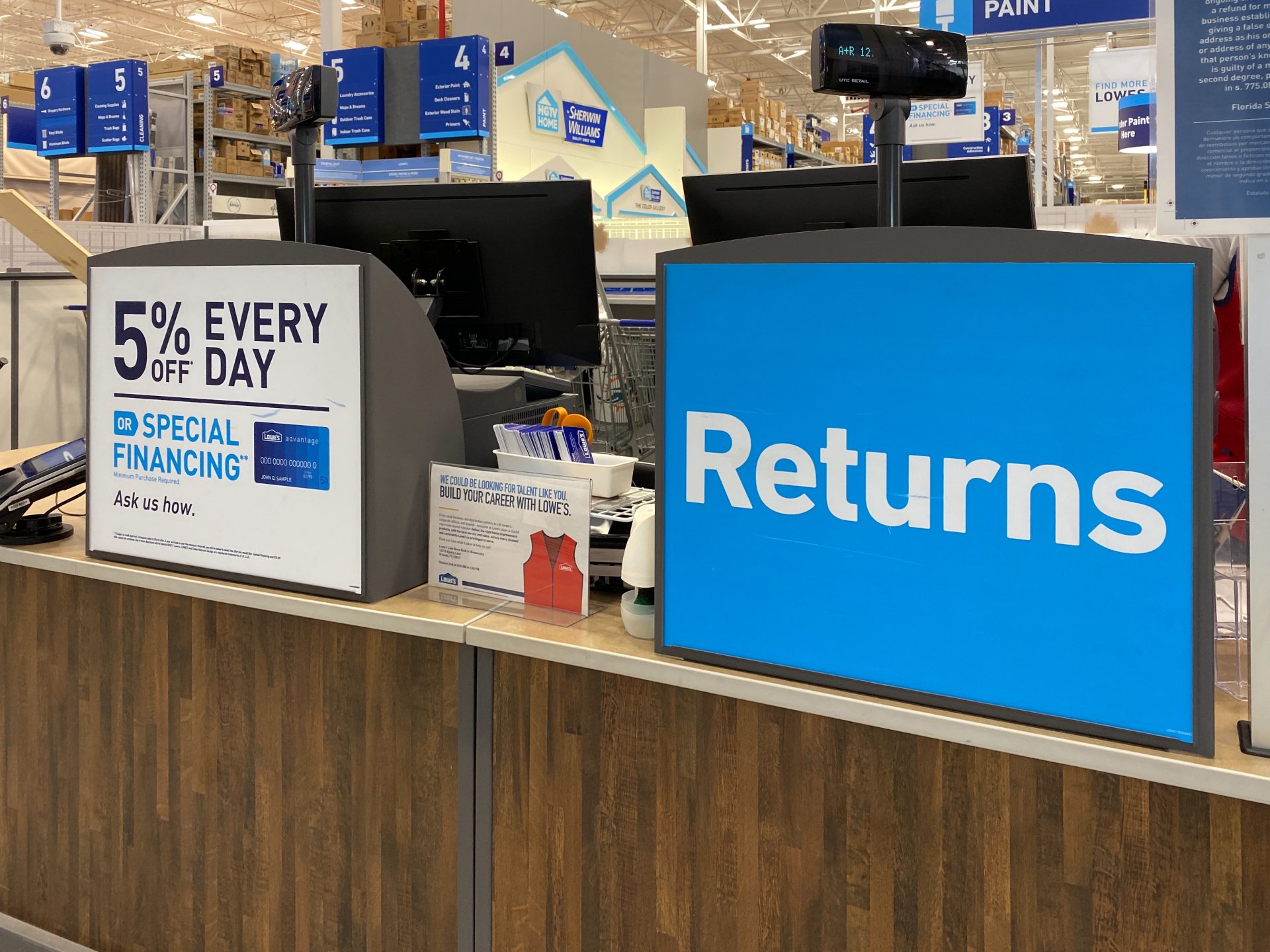
Retail returns aren’t just an ecommerce problem; every retailer should be thinking about ways to reduce them. Online purchases are returned more often than items bought in-store, but in-store returns still take a big bite out of retailers’ margins.
The scale of the problem is huge. According to the NRF and Happy Returns, U.S. consumers were expected to return about $890 billion worth of merchandise in 2024, or 16.9% of annual retail sales. So, what’s a retailer to do to protect margins?
요약하자면: To reduce in-store returns, help shoppers research products in the store (fast WiFi, accurate product info and associates equipped with mobile devices), follow up with customers after purchase by email and social media, and tighten reverse logistics so the returns you do get go back on sale faster.
The touchy subject of return policies
Generous return policies were a retail trend for years, but many retailers have scaled back to contend with serial returners. L.L.Bean, for instance, ended its famous lifetime return policy in 2018 and now gives customers up to a year to return most purchases.
Certain retail categories are particularly vulnerable to serial returners. Apparel is a prime example: in 2019, Forbes reported that apparel gifts were returned at double the rate of other holiday gifts.
Rising return rates, driven in part by ecommerce and serial returners, have led many retailers to shorten return windows, add restocking fees or start charging for mail-in returns. Zara, for example, began charging customers for online returns sent by mail in 2022.
그러나 반품 정책이 너무 엄격하면 반복될 수 있습니다. 그리고 처음 고객. 따라서 매출을 줄이지 않고 수익을 줄이려면 전략적이어야 합니다. 다음은 매장에서 반품을 줄이는 데 사용할 수 있는 3가지 전략입니다.
Enable in-store product research
쇼루밍과 웹루밍을 기억하시나요? 글쎄, 그들은 여전히 일어나고 있지만 69% 의 고객이 매장에서 구매하기 전에 휴대전화에서 제품 리뷰를 조사합니다.

WiFi의 중요성
즉, 실제 매장에서 일관되고 빠른 WiFi 연결을 제공하지 않으면 고객이 구매 결정을 내리기 전에 필요한 제품 조사를 할 수 없습니다. 그 결과… 짐작하셨겠지만… 매장을 떠나 온라인 커뮤니티, 가족 및 친구로부터 제품 피드백을 받을 때 다시 돌아옵니다.
인터넷 속도 대 대기 시간은 매장에서 제품 조사를 가능하게 하는 능력에 영향을 미칠 수 있는 또 다른 요소입니다. 페이지 로드 시간이 느리면 고객이 구매 결정을 알리는 데 필요한 제품 조사를 하지 못할 수 있습니다.
5G is now widely available and supports far more connected devices than 4G. As Raconteur explains, “4G can support about 4,000 devices per square kilometer, whereas 5G will support around one million.” Even so, strong in-store WiFi remains the most reliable way to make sure every shopper can look things up.
Up-to-date product information
모든 제품 데이터를 온라인에서 사용할 수 있도록 하는 것도 마찬가지로 중요합니다. 제품 정보를 최신 상태로 유지하십시오. 고객이 항상 자신을 위해 구매하는 것은 아닙니다.
제품이 채식 재료로 만들어졌는지 여부, 야외에서 착용했을 때 의류가 어떻게 움직이는지, 생산 공정의 지속 가능성, 제품이 작은지 큰지 여부와 같은 정보. 이 모든 것이 고객에게 필요한 제품 데이터를 제공합니다. ~ 전에 그들은 구매를 합니다.
In-store tech
마지막으로 매장 직원에게 기술을 제공하여 고객에게 제품 정보와 가용성에 대한 정보를 제공할 수 있도록 하는 것에 대해 생각해 보십시오. 또한 매장 내 기술을 통해 고객 서비스 수준을 높일 수 있습니다. 직원은 매장에 재고가 없는 품목에 대한 고객의 온라인 주문을 처리할 수 있습니다. 이렇게 하면 고객의 쇼핑을 편리하게 유지하면서 구매를 확보하는 데 도움이 됩니다.
Nordstrom was doing this back in 2012. In an article for NPR, Nordstrom’s public relations director, Colin Johnson, said, “You’ve got to be rapid, you’ve got to be on the spot. You have to have that information at your fingertips.”
In the same eMarketer research, 66% of store associates said they could provide better customer service if they were equipped with tablets. Reduce returns by giving customers what they need, and boost your bottom line by equipping employees with the knowledge and tools to make the sale.
Reduce returns by following up online
얼마나 자주 놀라운 구매 경험을 하고 소매업체로부터 다시는 소식을 듣지 못했습니까? 현대 소비자는 소매업체가 소매업체와 지속적인 관계를 발전시키기를 기대합니다. 또한 오프라인 매장, 이메일, 소셜 미디어, 인쇄 마케팅(경우에 따라) 등 여러 접점에서 이를 수행합니다.
Consumers are more loyal when retailers put in the work. In a 2019 roundup of retail stats, 포브스 reported that 77% of consumers (and 60% of millennials) had relationships with certain brands lasting more than 10 years.
전통적인 오프라인 소매업체인 경우 채널 간 관계 구축이 비교적 새로운 개념으로 느껴질 수 있습니다. 하지만 그냥 월드와이드 웹에서 수행되는 전통적인 클라이언트(박스 방식의 카드에서 오래된 호출)와 같이 생각하십시오.
그것은 후속 호출에 사용되었습니다. 이제 후속 이메일과 소셜 미디어에 대한 사랑입니다. 결제할 때마다 고객의 이메일 주소를 받아 구매를 축하하는 것으로 시작하세요.
다음으로, 아직 만들지 않았다면 브랜드별 해시태그를 만들 차례입니다. 고객이 소셜 미디어에서 브랜드 해시태그를 사용하는 것을 모니터링하여 고객이 제품 이미지를 공유할 때마다 고객에게 개인적으로 감사(또는 다시 그램)할 수 있습니다.
Brand-specific hashtags help start an ongoing dialogue that can drive repeat purchases and make customers more excited about the products they already own. And engagement pays: Gallup research has found that fully engaged customers deliver a 23% premium in share of wallet, profitability and revenue compared with average customers.
예를 들어, 킷 캣 소셜 미디어 플랫폼에서 #HaveABreak라는 태그라인을 사용합니다. 그들의 고객은 KitKat 및 소셜 커뮤니티에 참여하기 위해 이를 알고 사용합니다.
또한 KitKat의 브랜드별 해시태그를 사용하면 소셜 미디어에서 고객 불만 사항을 검색하고, 연락하고, 솔루션을 제공하여 훌륭한 서비스를 제공하고 부정적인 영향을 완화할 수 있습니다.
If you can’t beat ‘em, reduce return impact
수익률에 대해 보다 전략적으로 접근할 수 있는 기회도 있습니다. 하다 happen in-store to reduce their impact on your bottom line. The cold, hard truth: a 2019 PYMNTS report found that less than half of returned goods are resold at full price.
반품의 부정적인 영향을 줄이려면 역 물류(역 공급망) 운영을 개선하는 것으로 시작하십시오. 이렇게 하면 더 짧은 시간에 반품된 상품을 리퍼비시, 청산 또는 판매 현장에 다시 넣을 수 있습니다. 즉, 더 적은 수의 제품을 표시하고 재정적 타격을 덜 받아야 합니다.
Communication is one of the most important factors in the reverse logistics process. You need to ensure stores know the most efficient way to handle returns. You can use a communication platform like 빈디 귀하의 상점을 계속 알 수 있습니다.
예를 들어, 중소 규모의 SMB인 경우 복잡한 반품 쿼리에 응답하거나 직원이 업데이트된 정책을 실행하고 있는지 확인하는 관리 직원이 항상 있는 것은 아닙니다. Bindy의 인앱 채팅을 사용하면 직원이 즉시 안전하게 메시지 관리를 통해 도움을 받을 수 있습니다.

사용 작업 직접적인 라인을 만들기 위해 의사소통 직원들에게 지원 자료를 보내기 위해 경영진과 소매 직원 사이에 연락을 취합니다(그리고 그들이 읽었는지 확인하십시오).
직원은 제품 이미지를 업로드 및 공유하고 피드백을 요청하여 귀하와 커뮤니케이션할 수 있습니다. 또한 연결된 작업을 생성하여 직원이 쉽게 따라할 수 있는 시리즈를 통해 실시간으로 반품을 재활용할 수 있습니다.
마지막 생각들…
고객이 제품을 반품할 수 없도록 하는 것은 현대 소매업체에게 너무 위험한 제안입니다. 매장 내 반품은 비용이 많이 들지만 예방 조치를 취하면 크게 줄일 수 있습니다.
여기에서 논의한 도구를 활용하고 고객과 지속적인 대화를 나누면 우수한 고객/소매업체 커뮤니케이션을 통해 매장 내 반품을 줄일 수 있습니다. 행복한 판매!
Get every store handling returns the same way
Bindy keeps return policies, procedures and follow-up tasks in one place, with chat for quick questions and photo checks to confirm execution. Plans start at $129/month with unlimited users and locations. 14일 동안 무료로 시작하세요, 신용카드는 필요하지 않습니다.
저자 소개:

재스민 글라신 is a retail writer, content marketer, and brand representative. She provides thought leadership on the retail sector for The Robin Report, IBM, Retail Minded, Sourcing Journal, and many more.



 KO
 EN
 AR
 NL
 FR
 DE
 EL
 HE
 HI
 IT
 JA
 PL
 PT
 ES
 SV
 TR
답글 남기기