
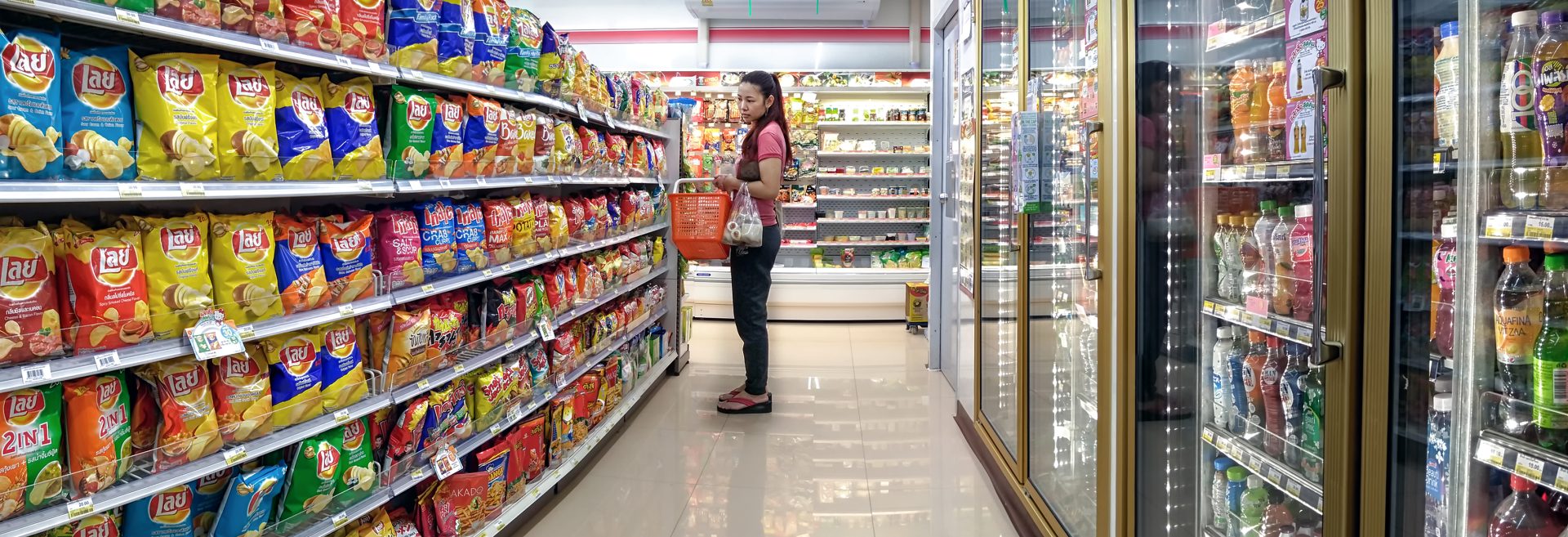
Εν συντομία: The U.S. has about 152,000 convenience stores, and in-store sales reached a record $341.2 billion in 2025, the 23rd straight year of growth, according to NACS. Foodservice now makes up 28.5% of in-store sales and nearly 39% of in-store gross profit, while fuel sales fell with lower gas prices. Winning c-stores focus on fresh food, cleanliness, smart seasonal merchandising and consistent promotional execution.
Through our business and research, we come across a lot of facts and statistics about the convenience store (γ-κατάστημα) industry, its direction and emerging trends. Here are the highlights, updated with the latest data.
There are lots of convenience stores
Σύμφωνα με NACS (April 2026), there were 151,975 convenience stores in the U.S. at the end of 2025, down slightly (0.2%) from the year before. Of those, 122,620 sell fuel, a number that grew 0.6%. The average store handled 1,484 transactions a day in 2025.
In-store sales keep setting records
C-store in-store sales (foodservice plus merchandise) reached $341.2 billion in 2025, up 1.7% and the 23rd consecutive year of growth. Total industry sales, including fuel, were $817.5 billion.
Fuel still dominates the top line, at 65% of sales dollars, but it brings in a smaller share of profit (38.8% of gross profit dollars). Fuel sales fell 5.4% to $476.3 billion in 2025 as the average gas price dropped from $3.30 to $3.11 a gallon, even though gallons sold rose slightly. That makes what happens inside the store more important than ever.
Store execution tip: Traffic and basket mix change with the seasons. In summer, for example, road trips lift demand for cold drinks and portable snacks. Plan ahead: re-prioritize shelf space for seasonal winners, scale back slower categories, and make sure every location actually sets the plan.

C-stores are a growing destination for prepared food
Foodservice has become the industry’s profit engine. NACS reports that foodservice made up 28.5% of in-store sales and 38.9% of in-store gross profit in 2025, up from just 11.9% of in-store sales in 2005. Prepared food now accounts for 73.9% of foodservice sales, up from 66.4% in 2021.
Younger shoppers in particular are drawn by food quality and freshness, and many consumers say the quality of in-store food influences where they stop for fuel. Food safety, freshness and consistent presentation across locations are now core c-store competencies.
Beverages and better-for-you snacks are growing
Packaged beverages were 18.7% of in-store sales in 2025, up 0.8 points from 2024. Alternative snacks such as jerky, seeds and nuts grew 7.9%, which NACS links in part to demand from shoppers using GLP-1 medications. Fresh and better-for-you items deserve prime shelf space and close attention to freshness and rotation.
A profitable alternative to car washes? Wine!
In one example highlighted by NACS in the 2010s, El Carajo, a Miami gas station and convenience store, replaced its car wash with a wine shop and tapas restaurant. Wine became a significant share of its sales, showing how a creative use of space can turn a c-store into a destination. Where local laws allow, beer, wine and spirits can be an important traffic and margin driver.
Fuel and lottery generate in-store traffic
Converting fuel customers into in-store customers is the industry’s perennial opportunity, and cleanliness is a big part of it. NACS consumer research has long shown that a clean, well-lit store is a key factor in whether drivers who stop for fuel decide to go inside, most often for a drink or a snack.
Lottery is another traffic driver. Convenience stores sell a large share of U.S. lottery tickets, and lottery customers often buy at least one other item while in store.
Τα ψιλικατζίδικα είναι ένα παγκόσμιο φαινόμενο
Taiwan has long had one of the highest concentrations of convenience stores in the world. A 2015 study reported by Focus Taiwan counted more than 9,800 stores and 2.878 billion visits a year, roughly 123 trips per person. Japan and South Korea are similarly dense c-store markets.
Promotional compliance is often lower than you think
Merchandising executives tend to overestimate how well promotions and displays are executed in stores. Industry analyses reported by Convenience Store News have found that promotional compliance at the c-store level can be as low as 50%, well below what head office assumes.

A structured πρόγραμμα επίσκεψης στο κατάστημα can close that gap. Even better, run store checks on mobile retail audit software so you collect photo proof and fix issues quickly while cutting admin time.
Get every c-store on the same page
Bindy helps convenience store chains share promotions and planograms, run food safety and cleanliness checklists, and verify execution with photo proof and 28 built-in reports. Plans start at $129/month with unlimited users and locations. Ξεκινήστε δωρεάν για 14 ημέρες, δεν απαιτείται πιστωτική κάρτα.


 EL
 EN
 AR
 NL
 FR
 DE
 HE
 HI
 IT
 JA
 KO
 PL
 PT
 ES
 SV
 TR
Αφήστε μια απάντηση