
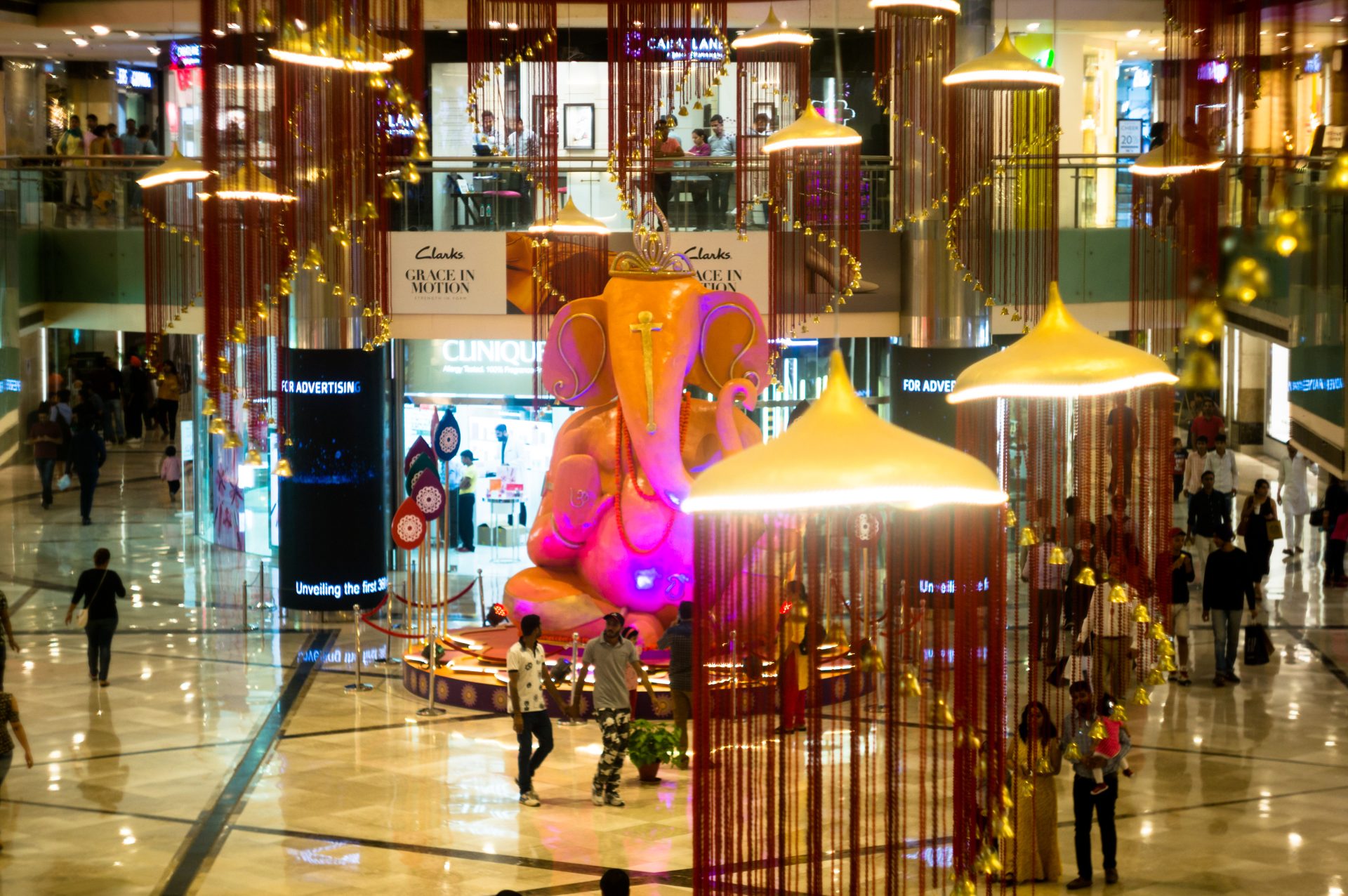
باختصار: India’s retail market is worth roughly $1 trillion and a BCG–Retailers Association of India report projects it could reach $2.3 trillion by 2035. The world’s most populous country has a young population, fast internet adoption (about 958 million active users in 2025) and rapidly growing online retail, yet small independent stores still dominate and most shopping happens in physical stores. Key hurdles for retailers are regulation, real estate and logistics.
A young population, a growing middle class and massive infrastructure investment in one of the world’s fastest-growing major economies are reshaping retail in India. Here are the key facts and trends.

Market size and outlook
A February 2026 report by Boston Consulting Group and the Retailers Association of India (RAI) put India’s retail market at about Rs 90–95 trillion (roughly $1 trillion) in 2025, and projected it could reach Rs 210–215 trillion (about $2.3 trillion) by 2035, supported by strong GDP growth and rising consumption.
Demographics and incomes
1. The world’s largest population
In 2023, India overtook China as the world’s most populous country, with more than 1.4 billion people. Yet its share of global consumption has historically been far smaller than its share of population (PwC estimated about 3% in 2017), which shows how much room there is to grow.
2. A young population
While much of the world is aging, India is young: PwC estimated in 2017 that 47% of Indians were under 25. Young consumers drive sales in fashion, food and beverage, quick service restaurants and smartphones, and they’re willing to experiment with new brands.
3. Rising incomes, uneven wealth
Per capita income roughly تضاعف between 2014 and 2022, and consumers are trading up to branded products, convenience and healthier options. But averages hide large inequality: the affluent consumers most international retailers target are a small share of the population, though still tens of millions of people, a market larger than many European countries.
4. Smaller households, more working women
Nuclear families now make up the large majority of Indian households and tend to spend more per person than joint families. As more women join the workforce, demand grows for products and services that save time.
5. التحضر
India’s cities are growing quickly, and McKinsey has long projected a sharp rise in urban households with real discretionary spending power. Urban growth is also creating huge demand for better infrastructure, from transit to modern retail space.
The retail landscape
Unorganized vs. organized retail
India’s market is still dominated by “unorganized” retail: kirana stores, street stalls and small shops owned by individuals or families. Organized chains and online retail have grown faster for years, but the BCG–RAI report notes that organized retailers are no longer significantly outpacing overall category growth in offline retail, as independent stores modernize with digital payments, distributor apps and quick delivery.
Food and grocery is by far the largest category, followed by categories such as apparel and consumer electronics. Consumers increasingly “uptrade” to branded and better-quality products and pay for service and convenience.
Digital adoption
Internet access has exploded. The IAMAI and Kantar Internet in India Report 2025 counted about 958 million active internet users, up 8% year on year, with rural India now accounting for more than half (about 548 million). Around 230 million urban users, 56% of the urban base, shopped online in the past year. Cheap mobile data and UPI digital payments have brought hundreds of millions of new shoppers online.
Brick-and-mortar remains central
Despite fast online growth, most retail spending in India still happens in physical stores. Indian shoppers often want to touch and feel products to be sure they’re buying quality, and stores remain the most convenient option in many towns. As in other markets, there’s no نهاية العالم للبيع بالتجزئة: physical and digital retail complement each other.
Even online giants have pursued store networks. In 2019, Amazon took an indirect stake linked to Future Retail, then owner of the Big Bazaar hypermarkets; the deal ended in a long legal dispute, and Future Retail later went into insolvency. The lesson for foreign brands: physical distribution in India is valuable, but partnerships need careful structuring.
E-commerce and quick commerce
Online retail is growing fast. According to Redseer data reported by IBEF in October 2026, India’s online retail market grew about 25% year on year in the first half of 2026 and is expected to exceed $90 billion for the full year. Most e-commerce runs through marketplaces such as Amazon and Walmart-owned Flipkart (including fashion platform Myntra), while quick-commerce apps delivering groceries and essentials in minutes have become a major force in large cities.
البضائع الاستهلاكية المعبأة
A growing middle class and exposure to global brands are driving CPG sales across food and beverage, personal care and household care. Hindustan Unilever is the largest player, with brands such as Sunsilk, Glow & Lovely (renamed from Fair & Lovely in 2020) and Brooke Bond. Other major multinationals include Nestlé, Procter & Gamble and Colgate-Palmolive, alongside strong domestic brands.
Health and wellness is a major trend, with government emphasis on fortified foods and reducing fat, salt and sugar.
Pain points
Foreign direct investment (FDI) rules
Foreign retailers face investment rules that vary by format. Restrictions on single-brand retail have been relaxed over time (for example, the FDI cap was raised from 51% to 100% in 2012, with conditions), while multi-brand retail and marketplace e-commerce remain more tightly regulated. Get local legal advice before entering; this article is not legal advice.
بنية تحتية
Limited quality real estate in big cities, storage and transport infrastructure remain challenges, and distribution to a geographically dispersed population is fragmented. In a 2017 PwC survey, 75% of retailers said lack of space, or poor-quality space, constrained their growth.
Infrastructure is a national priority, with large investments in highways, airports, freight corridors and logistics parks. One flagship project is the Delhi–Mumbai Industrial Corridor, linking the capital with the financial hub along a dedicated freight corridor of more than 1,500 km, with new manufacturing cities planned along the route.

افكار اخيرة
India is one of the most important retail growth markets in the world. A young, digital-first population, rising incomes and improving infrastructure point to continued growth, in stores and online. For retailers and brands expanding there, consistent execution across a fast-growing, widely dispersed store network will be a key differentiator.
Scaling a store network in a fast-growing market?
Bindy brings communication, tasks and store audits together for multi-unit retailers and CPG field teams, so every location executes the same way. Plans start at $129/month with unlimited users and locations. ابدأ مجاناً لمدة 14 يوماً, لا حاجة لبطاقة ائتمان.



 AR
 EN
 NL
 FR
 DE
 EL
 HE
 HI
 IT
 JA
 KO
 PL
 PT
 ES
 SV
 TR
اترك تعليقاً